
Category: Uncategorized

  • On Trophies and Tuesday Nights

    There are two kinds of popular. There is the kind that gets you a plaque in the entryway, a spot on a year-end list, a nomination with a long name. And there is the kind that fills the dining room on a Tuesday in February. They are related the way a portrait is related to a person — one is evidence of the other, and it is dangerous to confuse the two.

    Awards are borrowed judgment

    An award is someone else’s opinion, arriving late. Judges reward what photographs well, what fits a narrative, what stands out in a stack of entries after lunch. None of that is worthless — press begets press, and a good list can introduce you to people who would never have found you. But awards are a lagging indicator at best, and a distorting one at worst. The moment a business starts designing for the jury instead of the guest, the work gets louder, the menu gets cleverer, and the regulars quietly start feeling like extras in someone else’s campaign.

    Sales are attendance

    Revenue is the only review written by everyone. It has no submission fee, no category, no gala. A neighborhood spot that turns tables every night without a single mention in the food press is popular in the only sense that keeps the doors open. The Tuesday crowd cannot be gamed. They are not impressed by your trophy case; they are voting with their evenings, over and over, which is the most sincere form of criticism there is.

    The order of operations

    Here is the pattern worth noticing: the places that win the awards that matter almost never chased them. They obsessed over the room, the plate, the price, the welcome — and the recognition arrived as a side effect, the way a good reputation does. Chase the jury and you may lose the room. Fill the room and the jury tends to find you.

    The same is true in branding, and I say this as someone whose industry hands out statues to itself with great enthusiasm. A rebrand that wins a design annual but doesn’t move sales is a portfolio piece, not a success. The work is for the Tuesday people. Everything else is decoration on the wall.
  • What Restaurant Menus Get Wrong

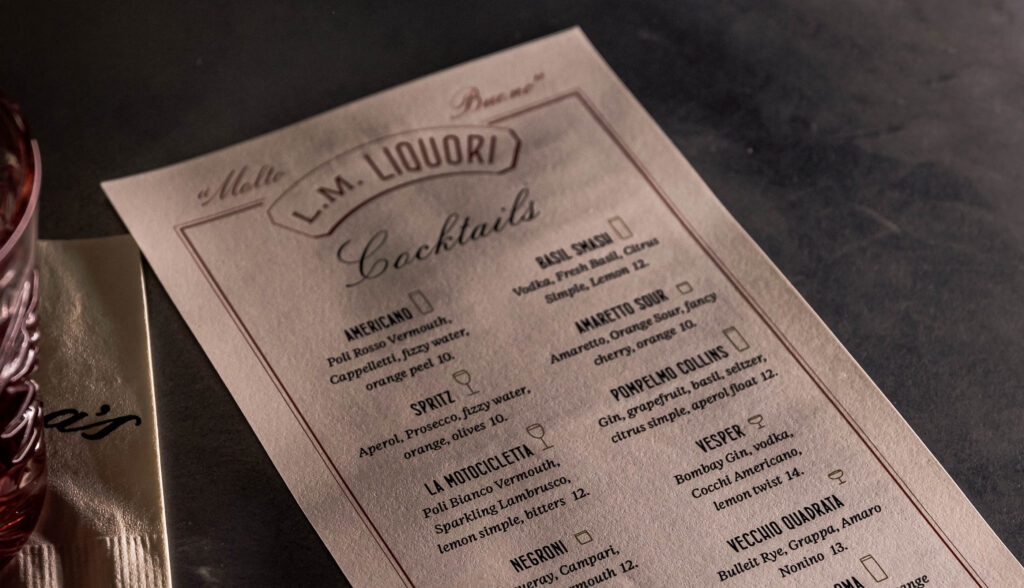
    The menu is the most-read publication your restaurant will ever produce. Every guest reads it, most of them twice, some of them out loud. It gets more circulation than your website, more attention than your Instagram, and more influence over what people order — and how much they spend — than anything your server says. And yet most menus are typeset like tax forms.

    Too many words

    The most common mistake is over-description. A dish that needs three lines of ingredients is a dish nobody remembers ordering. Good menu writing works like good editing: name the dish honestly, list the two or three things that make it worth ordering, and stop. White space is not wasted space — it is the pause that lets a dish register. The restaurants people trust most tend to say the least.

    No hierarchy

    Read any well-designed newspaper and you always know where to look first. Menus deserve the same courtesy. If everything is bold, nothing is. Decide what you want to sell — the dishes that define you, the ones with the margins that keep the lights on — and give them the typographic position of honor. Guests should be able to order well in thirty seconds without feeling rushed.

    Paper that fights the room

    A laminated sheet in a candlelit dining room breaks the spell before the bread arrives. Paper is the first thing a guest touches, and texture is information: a heavy uncoated stock says the kitchen sweats the details; a glossy trifold says value engineering. Print small runs, let the menu change, and let the paper age with the season. A few scuffs are patina, not neglect.

    Trend-chasing type

    Menus set in whatever typeface is fashionable this year will look dated by the time the next one is printed. Choose type the way you choose flatware — something with a history, something that matches the hand of the room — and let it become part of the identity. The goal is a menu that could only belong to your restaurant.

    A menu is not a list of inventory. It is the one piece of writing your guests came to read. Edit it like it matters, because it does.